IDQR vs HiHello: Which Digital Business Card Is Right for Your Team?
07/15/2026

HiHello helped popularize the digital business card, and it is a solid personal card app. But if you are choosing a platform for a team, or you care about what happens after you share your card, the details matter. This is an honest, up-to-date comparison of IDQR and HiHello across the things that change your day to day: sharing, analytics, Wallet support, CRM sync, team management and price.
Although we build IDQR and have our own point of view, we have kept the facts about HiHello accurate and its strengths on the table, because a comparison is only useful if you can trust it.
Prefer to just try it? You can create your first IDQR card for free in a couple of minutes, no app required.
Quick verdict
Choose IDQR if you want advanced analytics like heatmaps, trend charts and conversion funnels, a card that works entirely in the browser, saved in Apple and Google Wallet, CRM sync and team management at a lower price.
Choose HiHello if you want a well-known personal card app, you do not need analytics or team features, and you want more than one card on a free plan.
IDQR vs HiHello at a glance
Prices are current at the time of writing, so always check each provider's page for the latest pricing.
| Feature | IDQR | HiHello |
|---|---|---|
| Free plan | Yes (1 card with analytics) | Yes (up to 4 cards without analytics) |
| Works fully in the browser, no app to install | Yes (for you and for recipients) | Recipients need no app, but you need to install the HiHello app |
| Apple and Google Wallet | Yes | Yes |
| Platform languages | English, Spanish and German | English only |
| Analytics | Views, clicks, exchanges, heatmaps, trend charts, conversion funnels | Paid plans only, and lighter (personal on Pro, team dashboards on Business) |
| CRM sync (HubSpot and Salesforce) | Yes (from the €4.50/mo Professional Plan) | Yes (from the Business plan at $5/user/mo, min. 5 users) |
| Team management (org chart, roles, bulk creation) | Yes (from the Professional Plan; bulk creation on Enterprise) | Yes (from the Business plan) |
| Team ranking and leaderboard | Yes | Team reporting on Business |
| AI card scanner | Yes (included from the free plan) | Paid plans only (Professional Plan includes 20 per month, unlimited on Business Plan) |
| Entry paid price | €4.50/mo (Professional Plan) | $6/mo (individual Professional Plan) |
| Pricing model | Flexible, scales with cards, users and contacts | Fixed tiers, per user for teams |
Free plan
IDQR
Yes (1 card with analytics)HiHello
Yes (up to 4 cards without analytics)Works fully in the browser, no app to install
IDQR
Yes (for you and for recipients)HiHello
Recipients need no app, but you need to install the HiHello appApple and Google Wallet
IDQR
YesHiHello
YesPlatform languages
IDQR
English, Spanish and GermanHiHello
English onlyAnalytics
IDQR
Views, clicks, exchanges, heatmaps, trend charts, conversion funnelsHiHello
Paid plans only, and lighter (personal on Pro, team dashboards on Business)CRM sync (HubSpot and Salesforce)
IDQR
Yes (from the €4.50/mo Professional Plan)HiHello
Yes (from the Business plan at $5/user/mo, min. 5 users)Team management (org chart, roles, bulk creation)
IDQR
Yes (from the Professional Plan; bulk creation on Enterprise)HiHello
Yes (from the Business plan)Team ranking and leaderboard
IDQR
YesHiHello
Team reporting on BusinessAI card scanner
IDQR
Yes (included from the free plan)HiHello
Paid plans only (Professional Plan includes 20 per month, unlimited on Business Plan)Entry paid price
IDQR
€4.50/mo (Professional Plan)HiHello
$6/mo (individual Professional Plan)Pricing model
IDQR
Flexible, scales with cards, users and contactsHiHello
Fixed tiers, per user for teamsWhat both do well
Both platforms cover the fundamentals. You get a clean digital card you can share by QR code or a link, a way to collect contacts, customization to match your look, and an email signature. Recipients never need to install anything to view your card and save your details. If all you need is a nicer alternative to a paper card, either one will do the job.
Where IDQR pulls ahead
The differences show up once you look past the card itself, at what you can measure and how the platform grows with you.
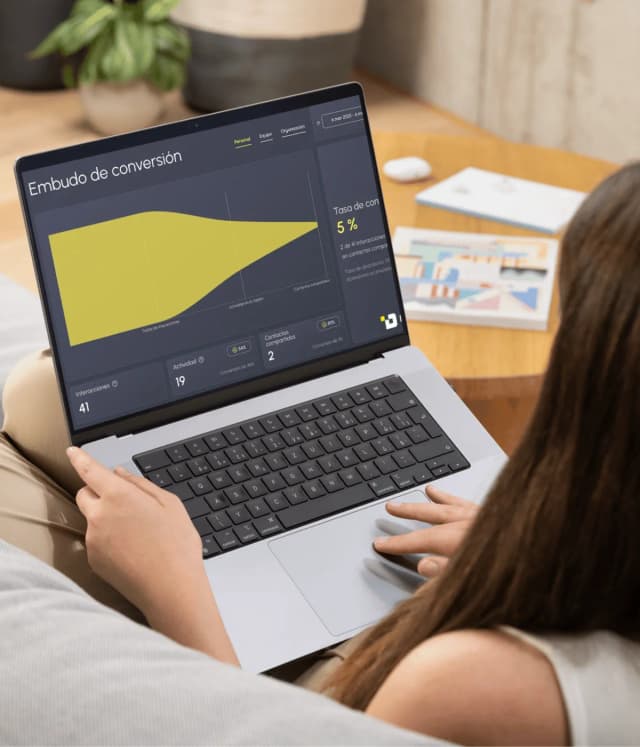
- Analytics that go beyond a view counter. See views, link clicks and contact exchanges, then dig into heatmaps, trend charts over time and conversion funnels that show how an interaction became a saved contact. HiHello's analytics are paid only and lighter.
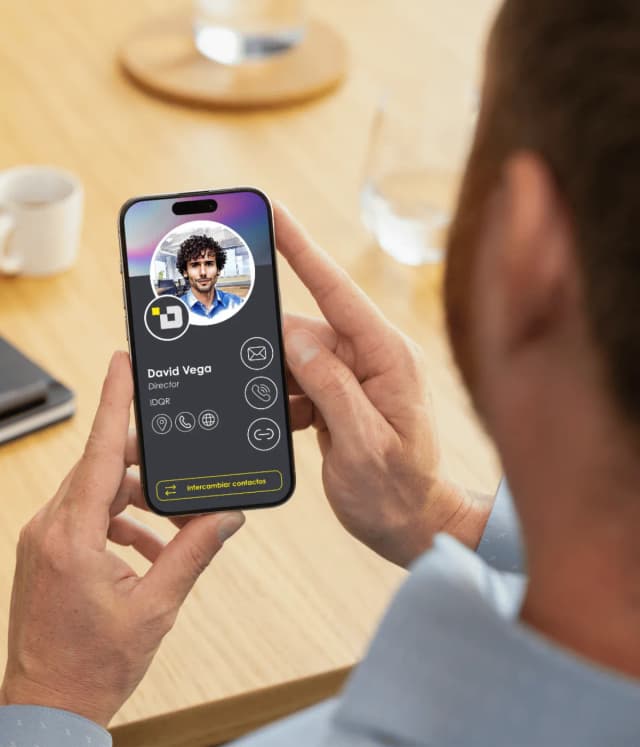
- No app required. IDQR runs entirely in the browser, so sharing is instant from any device with nothing to install, on either side. HiHello leans on its mobile app to share from your phone.
- CRM sync without jumping to a business plan. Contacts sync straight to HubSpot or Salesforce from the €4.50 per month Professional Plan. On HiHello, CRM sits on the Business plan.
- Team management built in. An interactive org chart, roles and permissions, and a team leaderboard, all from the Professional Plan upward. The Enterprise Plan adds bulk card creation from on-brand templates.
- Available in multiple languages. IDQR's platform works in English, Spanish and German, so international teams can use it in their own language. HiHello is English only at the time of writing.
- Flexible pricing that scales with you. Plans grow by cards, users and contacts, so you pay for what you need instead of buying a fixed tier with a per-seat minimum.
Where HiHello is strong
To be fair, HiHello has real strengths, and for some people it is the better fit.
- More cards on the free plan. HiHello's free plan includes up to four cards, while IDQR's free plan includes one.
- An established, widely recognized brand with a polished mobile app experience.
- SSO and directory sync on its enterprise plans, useful for large organizations with formal identity requirements.
Pricing compared
The clearest difference shows up when a team is involved.
IDQR's paid plans start at €4.50 per month for two users with the Professional Plan, which already includes advanced analytics, organization management and CRM sync with HubSpot and Salesforce. Because the plan is flexible, it scales up by cards, users and contacts as you grow, so you pay for what you actually use.
HiHello's individual Professional plan costs $6 per user per month and does not include CRM integration. The features most teams want, CRM integration, team analytics dashboards, SSO and admin controls, sit on the Business plan at roughly $5 per user per month, with a five-user minimum. For a small team that means paying for at least five seats before you unlock them.
In short: IDQR bundles CRM, analytics and team management into a single low monthly price, while HiHello reserves these features for its Business plan. Prices are current at the time of writing, so check each provider's pricing page for the latest pricing.
The verdict
Both offer an attractive digital business card. The real question is what you learn afterward and how well the platform scales as your networking or your team grows.
HiHello is a capable personal card app with a familiar name. IDQR is the stronger choice when you want genuine insight into your networking and room to grow: no app required, saved in Apple and Google Wallet, analytics with heatmaps and conversion funnels, CRM sync, and team management, at a price below HiHello's plans.
If you are weighing a switch, the easiest way to decide is to try it. Creating a card takes a few minutes, and the free plan already includes many of the features mentioned.
Frequently asked questions
Ready to switch from HiHello?
Create your IDQR card in minutes, add it to your wallet, and start seeing who actually engages. No app required, for you or the people you meet.
Create your free IDQR card